THEATRE OF INDIA / PEOPLEEditorial draft · pending the artist’s reviewSources checked · 08 Sep 2026
01 / THE BEGINNING · 2004
A poem. A friend. A first play.
In 2004, Shakkar Ke Paanch Daane reached the stage at Prithvi Theatre. Manav Kaul wrote and directed it; Kumud Mishra performed it. The production also marked the beginning of aRANYA.
Two decades later, Kaul recalled its beginnings to NCPA writer Vidhi Salla: a period away from acting, a poem shared with Mishra, and a friend who heard the possibility of a performance in those pages. Tushar Raut helped bring the first show to the stage.
That beginning offers a way into this profile: follow a piece of writing into the room, then follow the people who give it a life.
In Shakkar Ke Paanch Daane, an invitation to write a poem becomes an occasion for Rajkumar to describe the people who have shaped his life. The scale is intimate: a voice, memories, and the discovery that an apparently ordinary existence can hold a story.
Other plays open different rooms. Bali aur Shambhu brings two residents of an old-age home into an unlikely friendship. Ilhaam follows a man drawn toward childhood and a different way of perceiving the world, while fearing what he might lose.
Read alongside one another, these premises suggest an inviting route through Kaul’s theatre: people trying to understand their place in a world that does not always make room for them. This is our editorial reading of the documented stories, rather than a claim about the author’s intentions.
Kaul’s stage record includes performing as well as writing and directing. The aRANYA archive lists him in the cast of Peele Scooter Wala Aadmi, alongside Kumud Mishra, Satyajit Sharma, Gopal Tiwari and Sadiya Siddique. It does not name his character.
For ZEE’s 2017 Chuhal tour, he was both director and a member of the cast. The relationship drama brought him together with Sugandha Garg, Srishti Srivastava and Padma Damodaran. Its conversations turn on different ideas of love and marriage.
In Traasadi, NCPA credits him with all three roles: writer, director and performer. The solo work centres on a mother’s absence and the regret that follows. Here, the person who shapes the words is also the person meeting the audience.
A man feels drawn toward childhood and another way of seeing, but fears losing the life he knows.
The people behind this production
Writer and director: Manav Kaul. The archived ensemble includes Saurabh Nayyar, Kumud Mishra, Abhay Joshi, Ayesha Raza and Akriti Singh, with additional and alternate cast listed at the source.
The archive records alternate performers. Consult its full credit list for production-specific detail.
Three men contest places on three benches. A familiar public space becomes a question of who gets to belong.
The people behind this production
The aRANYA Hindi page jointly lists Manav Kaul and Kumud Mishra under “Writer & Director”. Its cast is listed as Sumeet, Shubro and Gopal.
The archive’s combined credit does not separate their responsibilities. Role allocation and complete performer names are flagged for the team’s review.
For viewers who discovered Kaul through Kai Po Che!, CityLights or Wazir, his theatre offers another route into his work. Uday Bhatia’s 2016 Mint profile places those screen performances alongside an already established writing and directing practice with aRANYA.
Stage and screen sit alongside each other here. The theatre is a continuing body of work worth exploring in its own right.
Prepared by Theatre of India from the sources listed. This is an editorial draft, not an interview or an artist-approved biography. Manav Kaul and aRANYA have not reviewed or endorsed it.
The profile deliberately separates the play from a particular production, and separates writing, direction and performance. It does not claim an exhaustive career record.
Review priorities: clarify the shared archive credit for Park; identify character names for confirmed acting credits; add missing productions and premiere dates with evidence.
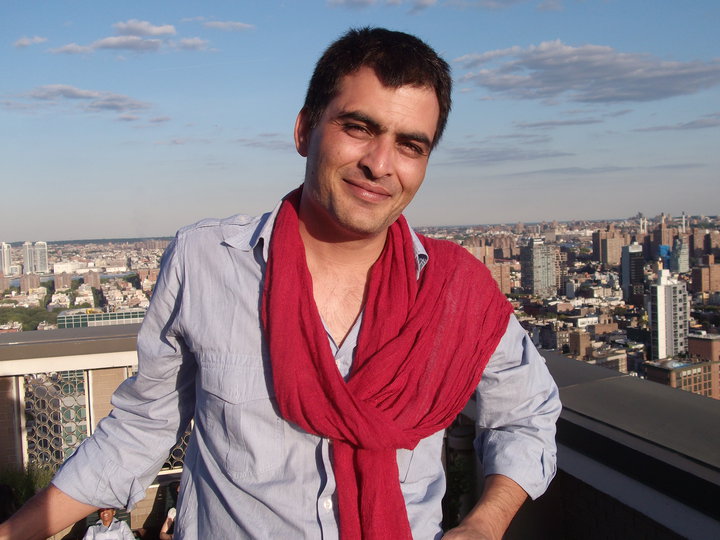
Profile version: MK-2026-09-08-v1. Photograph by Schreibstuck at English Wikipedia, used under CC BY-SA 3.0; the display crop and monochrome treatment are offered under the same licence. No endorsement is implied.