InstitutesWhat Was the IPTA Movement?
Theatre as a tool for justice: what the Indian People's Theatre Association was, and how it shaped a generation of artists.
Read Full StoryFrom the ancient verses of the Natyashastra to the vibrant stages of today, explore the rich tapestry of Indian theatrical tradition spanning over two millennia.
Dive deep into the world of Indian performing arts — its history, its people, its living traditions, and its future.
From the Natyashastra to Sanskrit drama, trace the remarkable journey of Indian theater through the ages.
Read More →Kutiyattam, Yakshagana, Jatra, Tamasha, Bhavai — discover the incredible diversity of folk and classical theater forms.
Read More →The actors, directors, and writers who shaped Indian theater but were never given the recognition they deserved.
Read More →NSD, Kalamandalam, Ninasam, Rangayana — explore where the next generation of Indian theater is being trained.
Read More →Current shows, upcoming festivals, and what’s happening on Indian stages right now.
Read More →Deep dives, interviews, reviews, and essays on the art and craft of Indian theater.
Read More →
InstitutesTheatre as a tool for justice: what the Indian People's Theatre Association was, and how it shaped a generation of artists.
Read Full Story
InstitutesThe training ground of India's finest actors and directors. What the National School of Drama is, and why it changed…
Read More
Folk TheatreStaged over days during Dussehra and honoured by UNESCO, Ramlila brings the Ramayana to life across India. Here is a…
Read More
Folk TheatreMartial energy, epic tales, and striking masks: a guide to Chhau, the semi-classical dance-theatre of eastern India.
Read MoreIndian theater has one of the longest unbroken traditions in the world. Here are its defining moments.
Bharata Muni composes the Natyashastra, the world’s oldest treatise on performing arts, covering drama, dance, music, and stagecraft.
Sanskrit drama reaches its golden age. Kalidasa writes Abhijnana Shakuntalam, considered one of the greatest plays ever written.
Regional theater forms emerge across India — Kutiyattam in Kerala, Yakshagana in Karnataka, early forms of Jatra in Bengal.
The Bengal Renaissance sparks modern Indian theater. Kolkata becomes the cultural capital. The first playhouses open.
Indian People’s Theatre Association is founded, linking theater to social justice and the independence struggle.
The National School of Drama is established in Delhi. Masters like Habib Tanvir, Girish Karnad, and Vijay Tendulkar redefine Indian theater.
Every state in India has its own theatrical soul. These are some of the most remarkable traditions still alive today.
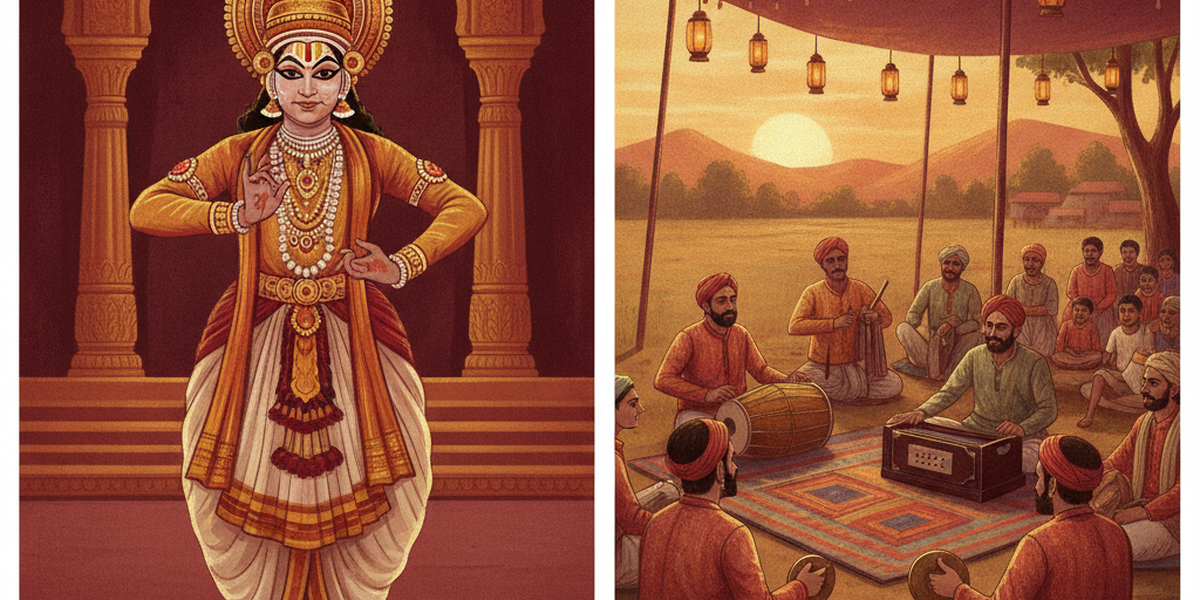
The oldest surviving theater form in the world, performed in temple theaters for over 2,000 years. UNESCO Intangible Heritage.
A spectacular dance-drama tradition combining music, elaborate costumes, and all-night performances depicting mythological stories.
Vibrant folk theater blending lavani dance, humor, and sharp social commentary. A voice of the people for centuries.
Bengal’s beloved traveling theater, drawing massive audiences with its dramatic storytelling, music, and larger-than-life performances.
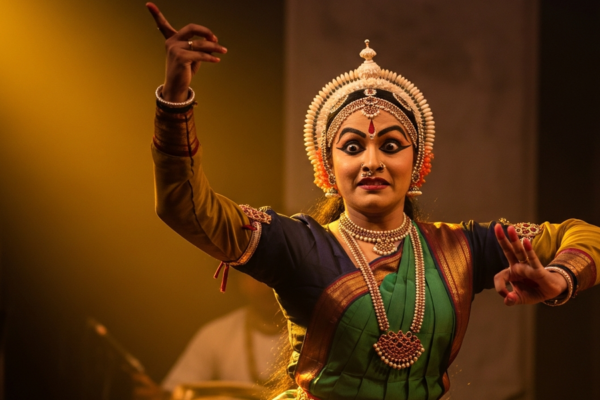
One of India’s most recognized art forms, with its iconic green-faced makeup, elaborate gestures, and ancient stories brought to life.
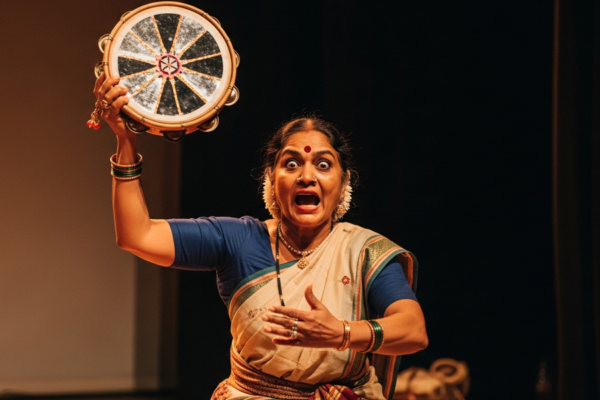
Centuries-old folk theater known for balancing brass plates while performing, blending acrobatics with sharp social satire.
The guardians of Indian theatrical tradition — where the next generation learns the craft.
India’s premier theater training institution, established in 1959. Alumni include some of India’s greatest actors and directors.
A deemed university dedicated to preserving Kathakali, Kutiyattam, Mohiniyattam, and other classical Kerala performing arts.
A legendary rural theater institute founded by K.V. Subbanna, proving that world-class theater can thrive in a village.
Founded by the legendary B.V. Karanth, this repertory theater continues to produce groundbreaking Kannada theater.