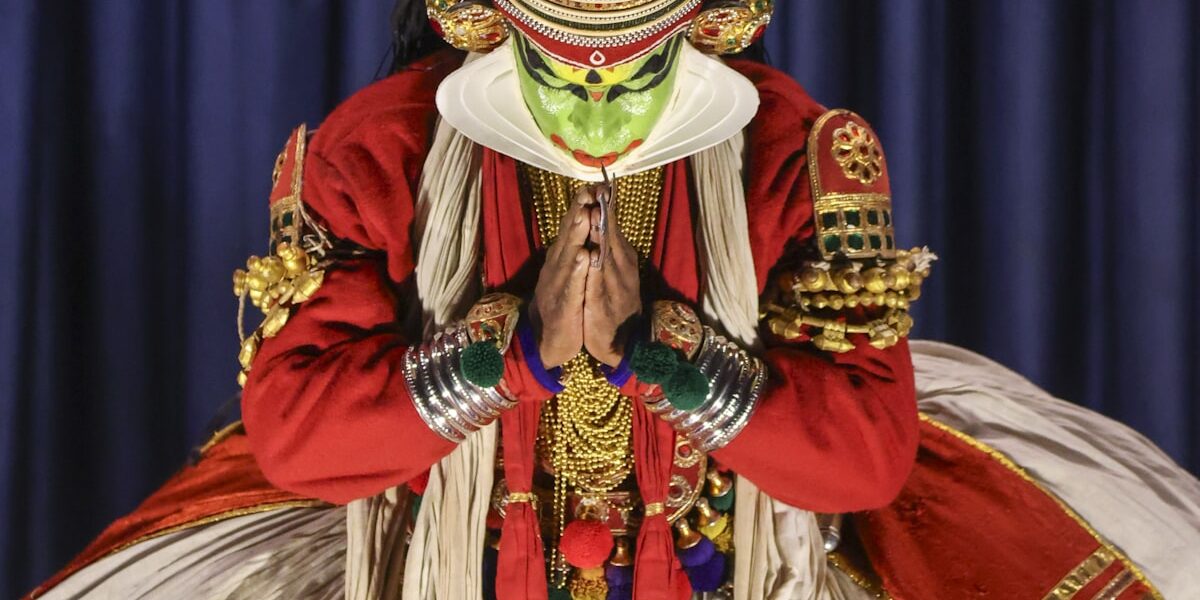
In the dim, lamp-lit interior of a Kerala temple, a single performer sits on a wooden stool. For the next several hours — sometimes over multiple nights — this artist will use nothing but facial expressions, hand gestures, and eye movements to bring an ancient Sanskrit play to life. This is Kutiyattam, and it has been performed continuously for over 2,000 years.
A UNESCO Treasure
In 2001, UNESCO recognized Kutiyattam as one of the Masterpieces of the Oral and Intangible Heritage of Humanity. It was one of the first art forms in the world to receive this honor — and for good reason. No other theater tradition on Earth can claim such an unbroken lineage.
The Koothambalams
Kutiyattam is traditionally performed in Koothambalams — special theater halls built within Hindu temples. These are among the oldest purpose-built theater structures in the world. The intimate space, the oil lamp that serves as the only light source, and the temple setting create an atmosphere that is both theatrical and sacred.
The Art of Netra Abhinaya
Perhaps the most remarkable aspect of Kutiyattam is its use of eye expression (netra abhinaya). Performers train for years to control every muscle around their eyes, capable of expressing dozens of distinct emotions through eye movement alone. This level of physical control is unmatched in any other theater tradition.
The Chakyar and Nangyar Families
For centuries, Kutiyattam was performed exclusively by members of the Chakyar and Nangyar communities — hereditary performer families who passed the art from generation to generation through rigorous oral training. Today, while the art has opened to students outside these families, the traditional lineages remain its core preservers.
A Tradition Under Threat
Despite its UNESCO recognition, Kutiyattam faces serious challenges. The number of active performers is small. The training is demanding and lengthy. And in a world of instant entertainment, the patience required to appreciate a multi-night performance is increasingly rare. Yet those who experience it often describe Kutiyattam as the most profound theatrical experience of their lives.